

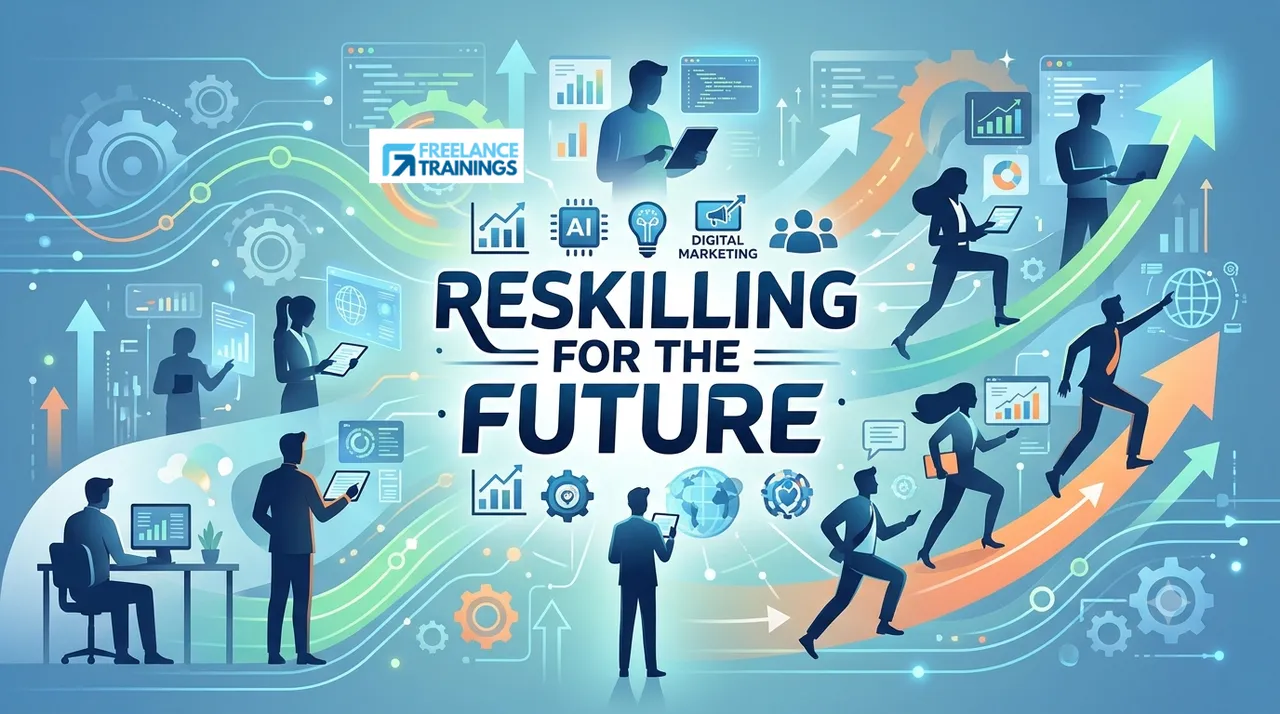
What Is Reskilling? Meaning, Examples, and Workplace Benefits

Mr. Sengupta
Freelance Trainings Contributor
Reskilling is now an incredibly important aspect of workforce development. It helps to provide employees with additional skills that can allow them to move into new roles. From a business perspective it can be an effective way to develop your internal talent.
It provides employees with additional skills which can allow them to move into new roles. From a business perspective it can be an effective way to develop your internal talent.
What is Reskilling?
The term reskilling involves training employees to learn new skills in order to change their job roles or departments. As opposed to professional development, reskilling prepares individuals to take up new roles.
An instance of reskilling occurs when a customer service executive learns data analysis skills to work as a business analyst.
Examples of Reskilling in the Workplace
Companies from different sectors may initiate reskilling programs in light of changing demands of their workforce.
Some examples are:
• Technology: Reskilling employees for automation and AI-based platforms.
• Digital Marketing: Assisting marketers in learning SEO and digital marketing.
• Data Analysis: Training administrative employees for data-related tasks.
• Customer Service: Reskilling customer service executives for digital customer experience platforms.
Why Is Reskilling Beneficial to Your Staff?
There are various advantages to reskilling in terms of upskilling your workforce strategy:
• Enhanced Workforce Flexibility: Facilitates adaptation of employees to new work demands.
• Internal Mobility: Enables employees to move to a new role.
• Staff Retention: Shows an organization’s interest in the career development of employees.
• Reduced Pressure to Recruit Staff: Allows companies to train their employees in case of a skill shortage.
Impact of Reskilling on Workforce Development
Reskilling will be most effective when accompanied by learning activities, tasks, mentorship and assessment. Organisations will need to think about the future and develop training programmes.
An effective upskilling your workforce program may help in this regard by improving the skills of existing employees and preparing them for future roles.
Conclusion
Reskilling helps them give your employees new skills and opportunities for them to pursue a new career. Investing in life-long learning will leave you with a flexible team who will have a strong foundation for future growth.