

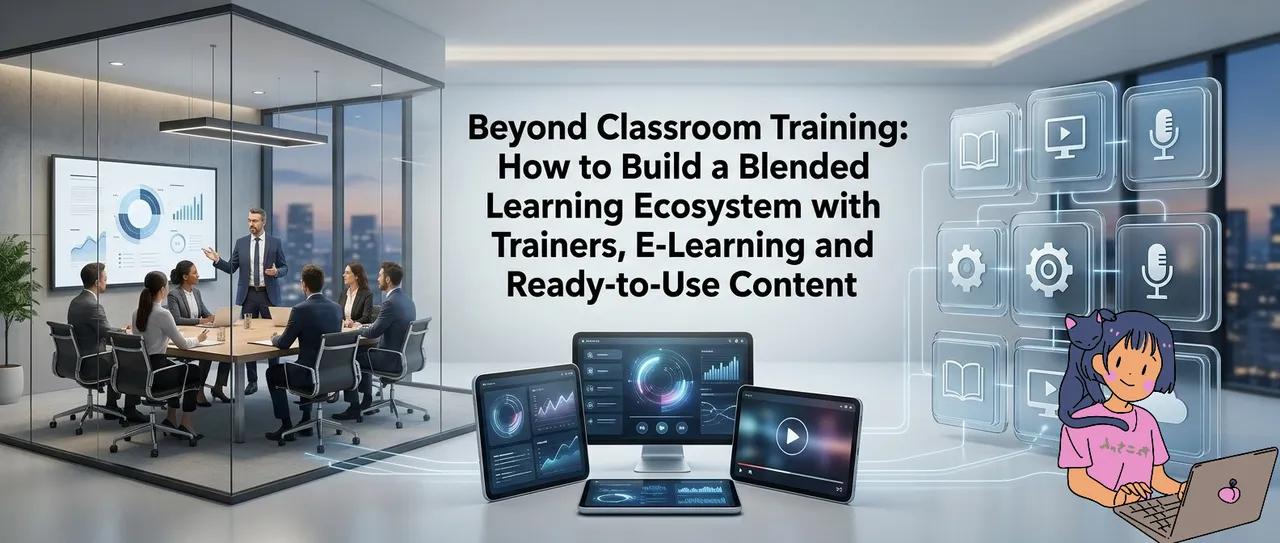
Beyond Classroom Training: Building a Blended Learning Ecosystem That Works

Mr. Sengupta
Freelance Trainings Contributor
While classroom learning is still essential in developing employees, organizations have realized that they must adopt learning processes that go beyond regular classroom trainings. Employees need access to knowledge, learning chances and resources consistently.
Blended Learning Ecosystem is composed of classroom learning, e-learning, and available content to form a more flexible system of blended Learning. Organizations do not have to rely on one type of learning process since several other resources can be integrated.
1. Why Classroom Learning May Not Be Enough on Its Own
Classroom learning allows interactions and discussions but may be hampered by issues such as timing, location, duration, and availability of the employees. The class learning may only introduce an idea to the learners without having many chances to revise or practice it.
The employees may need further learning aids to enable them to revise concepts and use what they learn in their daily activities.
2. Merge ILT Training with Bite Size E-Learning
Blended learning involves combining different forms of learning in order to make the experience more flexible.
Instructor-led training may involve discussions, practices, case studies, interactive activities, etc., whereas bite-sized e-learning may be used in between such training sessions to deliver short pieces of learning.
For instance, a leadership development program may include live workshop, small e-learning sessions on feedback and delegation, and discussions.
3. Utilize Editable Resources for L&D Internal Teams
Presentation decks, facilitation guides, exercises, assessments, and learning modules are typically what internal L&D teams need which can be tailored according to their organisational requirements.
Having access to employee training resources, especially those that are editable in nature, could help the team to tailor learning material according to their own requirements.
4. Support Development Opportunities for Employees
The continuous learning approach allows employees to re-examine knowledge, build competencies and be prepared for the challenges ahead. Learning via corporate e-learning courses can help with this through the provision of easy access to knowledge resources on such topics as communication, management, technical skills, employee behavior, and others.
A good combination of online learning and classroom training can be achieved.
5. Consolidate L&D Requirements
There might be a need for customised trainers, e-learning courses, editable training content and programs tailored to various departments within an organisation. The separate management of such requirements would increase the complexity of the learning process.
Integrated L&D solutions could assist organisations to consolidate trainer selection, e-learning and training content into one learning program.
Conclusion
Blended learning ecosystem is one that goes beyond the confines of class rooms in terms of developing the employees. Blending of trainers and e-learning and adaptive learning resources helps in making learning more flexible and continuous.
Explore E-Learning and Training Resources for Learning Materials and Opportunities to meet your training needs.
FAQs
1. What is blended learning in corporate training?
Blended learning involves the integration of classroom training with digital learning mediums like e-learning.
2. Why should organizations integrate classroom training with e-learning?
This helps offer more flexibility and reinforcement for the knowledge acquired during the classroom session and gives time to learn at one’s own pace.
3. What are pre-made employee training tools?
They are presentations, guides for facilitators, tests, activities, learning modules, and other tools which can be modified and used in training programs.
4. How does the method of blended learning help in the process of continuous employee development?
It provides an opportunity for employees to learn not only in training programs but also independently in their spare time.