

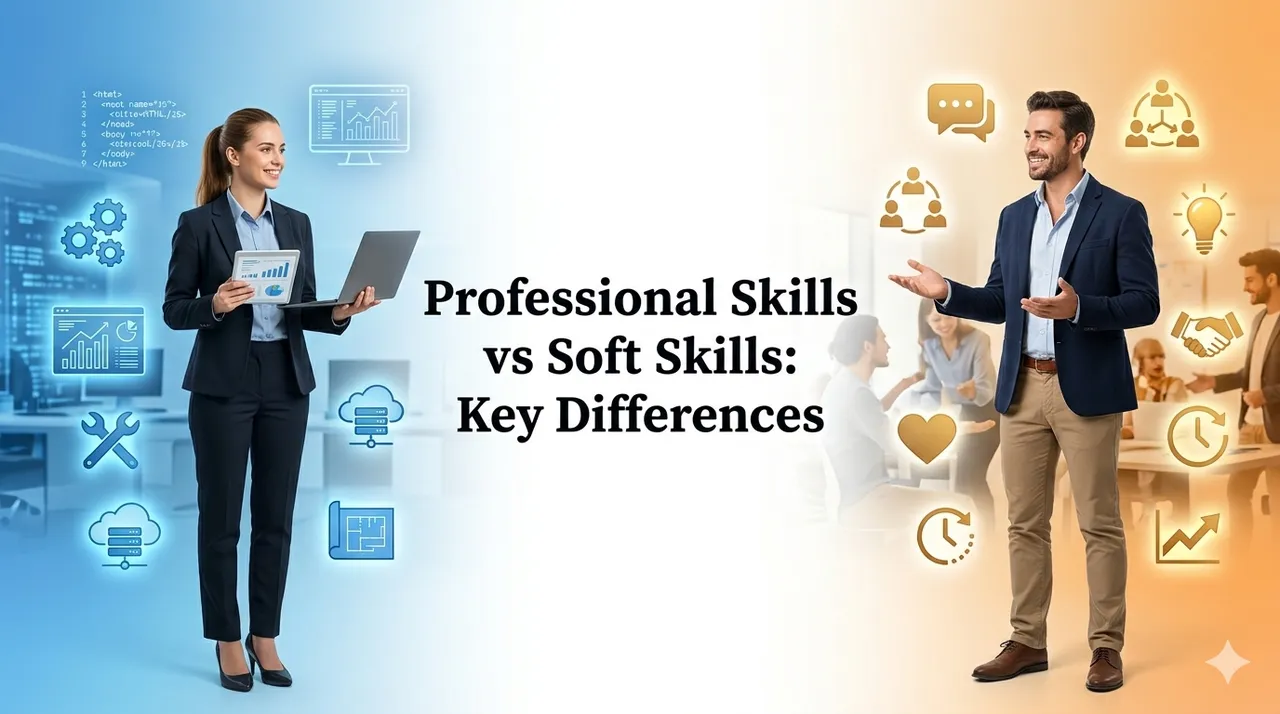
Professional Skills vs Soft Skills: Key Differences

Mr. Sengupta
Freelance Trainings Contributor
Both professional skills and soft skills can be beneficial for career success; however, they have distinct functions. The first set of skills assists people in performing job functions, whereas soft skills affect communication, cooperation and interpersonal interaction.
Realization of the distinction between professional skills and soft skills is important to improve career performance.
What Are Professional Skills?
Professional skills can be described as the abilities and competencies that one needs to have in order to work efficiently within his or her chosen profession. They include technical skills, industry knowledge, communication and organisational skills among others.
In other words, the skills needed by a professional digital marketer include SEO knowledge, campaign management, data analysis and client coordination.
What Are Soft Skills?
Soft skills are behavioral and interpersonal skills which affect the way individuals relate to others and handle tasks or situations within the work environment. They are not specific to any given profession.
Examples include communication skills, teamwork, adaptability, empathy, time management, conflict resolution, and critical thinking skills. It entails knowing what is soft skill development is in relation to improvement of these skills through practice and learning.
Professional Skills versus Soft Skills
Professional skills are more general and may also consist of technical, job-related, and behavioral skills. The soft skills are specific in that they revolve around managing interactions and relationships in the workplace.
An accountant can use accounting software and analyze financial information as professional technical skills, while good communication and attention to details will help them interact with their colleagues.
How Soft Skills Training Benefits Professional Life
Soft skill training is designed to help employees develop workplace communications, teamwork, leadership skills, flexibility and conflict resolution. Employees can learn how to make use of these skills in real-life workplace situations through activities such as role playing and discussions.
A soft skill certificate could prove involvement in a structured learning program, although application of skills and behavior could be good evidence too.
Career Options in Soft Skill Training
The increasing emphasis on workplace behavior and employee development can also provide career options for those who have an interest in training and facilitation. Soft skill trainer jobs in soft skill training can include conducting workshops on communication, leadership, teamwork, behavioral training and professional development programs.
Conclusion
Professional skills and soft skills are mutually beneficial. Professional knowledge will help workers fulfill their obligations whereas soft skills will assist them in communicating and adapting effectively. Both types of skills development will promote career success and enhance performance at work.
FAQs
1. Is there any difference between professional skills and soft skills?
Yes. Professional skills include various job skills, such as technical and behavioral, while soft skills are limited to interpersonal behavior, communication and flexibility only.
2. Can soft skills be acquired through training?
Yes, soft skills can be improved via practical exercises, feedback, coaching, role playing and work environment practice.
3. Will a soft skill certification be helpful in a career?
It shows evidence of attending formal education programs. However, employers appreciate real-life instances where one can apply soft skills.
4. Which qualifications are needed for soft skill trainers?
The qualification depends on the organisation. Experience, good communication, facilitation, subject knowledge, and training certification will be essential.